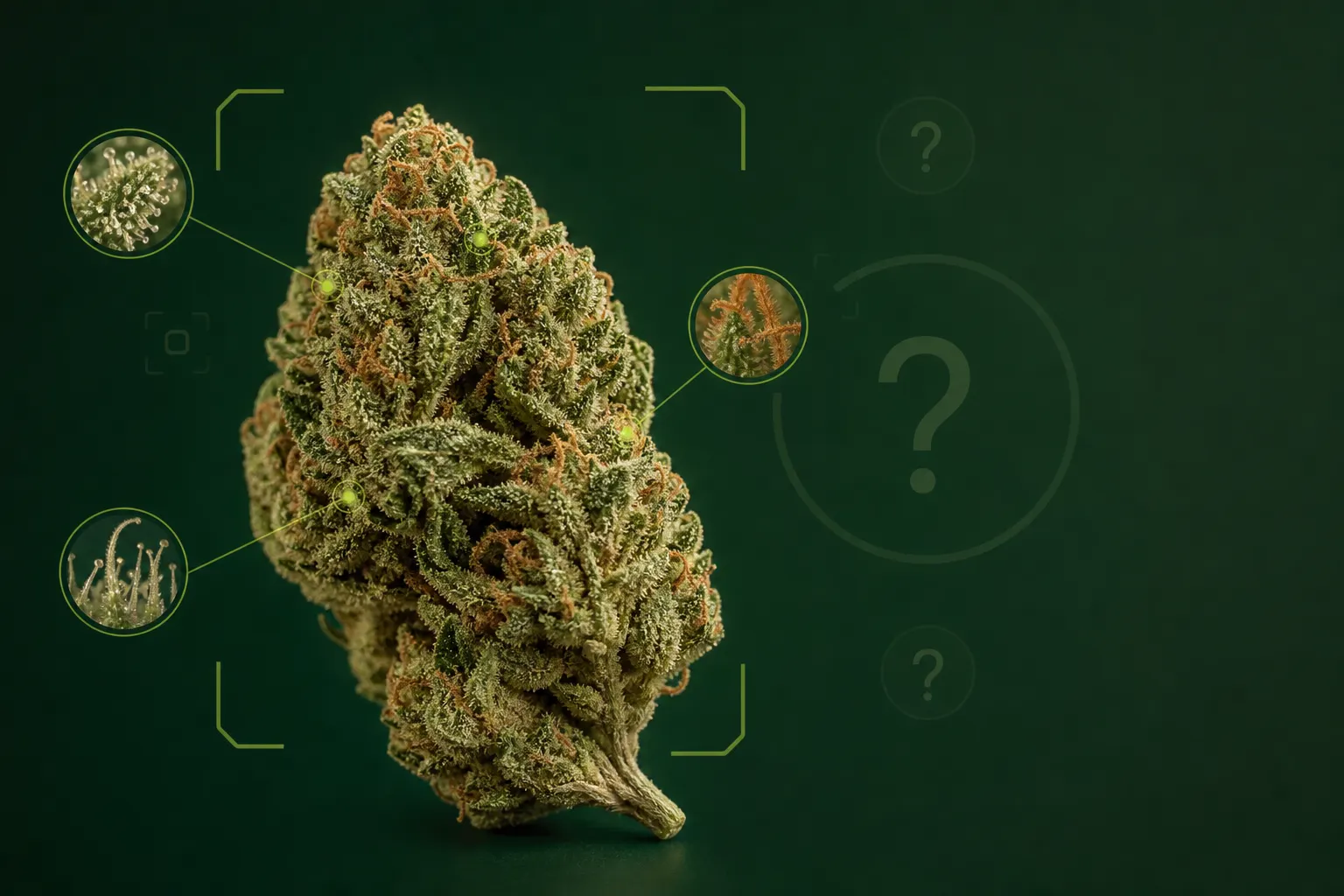
Quick answer: if you want to identify a weed strain by picture, use one sharp, evenly lit image of a single dry bud. A strain identifier tool can rank visually similar strains and explain the features behind the comparison. Treat the result as an informed probability—not proof of an exact strain name or a substitute for a batch label and certificate of analysis.
That distinction matters because cannabis flower changes with phenotype, growing conditions, harvest timing, trimming, curing, storage, and photography. Two batches sold under the same name can look different, while unrelated strains can share a dense shape, orange pistils, purple color, or heavy trichome coverage.
How a weed strain identifier works
A photo-based weed strain identifier turns visible details into patterns that can be compared with labeled cannabis images. KushScan is designed specifically for dry flower. It examines features such as texture, structure, color distribution, trichome appearance, stems, pistils, calyx-to-leaf balance, and overall density, then returns likely matches from its supported strain catalog.
The basic process is:
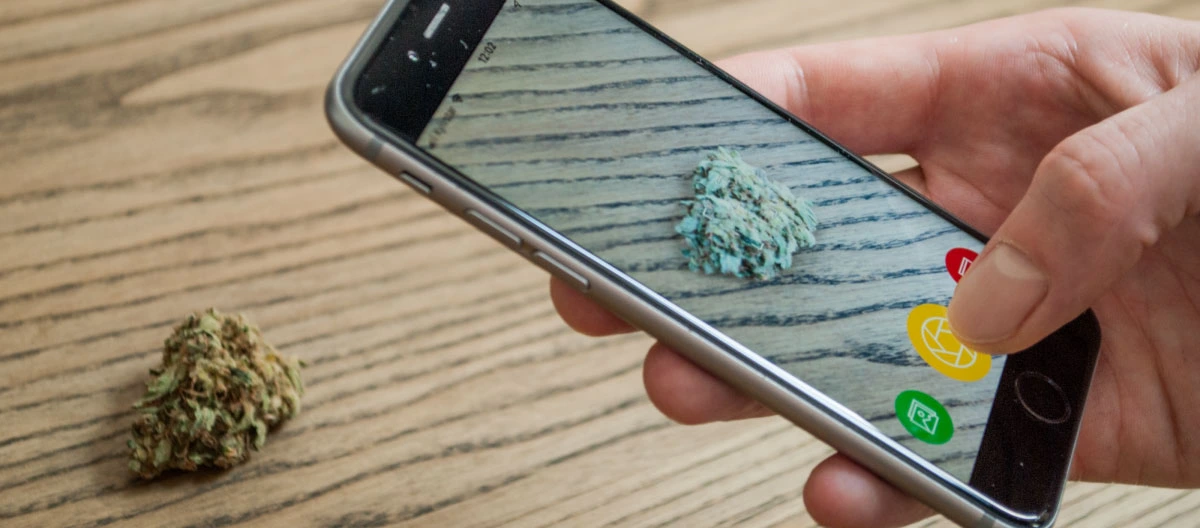
- Capture one clear photo. The dry flower should fill most of the frame without blur, filters, packaging, fingers, or a busy background.
- Check the image quality. Lighting and focus determine whether small features remain readable.
- Compare visible patterns. The tool evaluates the image against examples in its supported catalog.
- Review likely matches. Results are similarity-based possibilities, not genetic or chemical confirmation.
- Verify important details. Use packaging, batch information, and a matching COA for measured cannabinoids, terpenes, and safety tests.
What a cannabis picture can and cannot identify
A useful scan starts with realistic expectations. Visual information can narrow possibilities and teach you how to read flower, but many cannabis questions require evidence that pixels do not contain.
| A picture can help compare | A picture cannot verify |
|---|---|
| Dense, airy, rounded, spear-shaped, foxtailed, leafy, or compact bud structure | An exact cultivar, breeder, genetic lineage, or chain of custody |
| Green, purple, orange, amber, pale, or oxidized-looking color patterns | THC, THCA, CBD, CBG, terpene, or contaminant percentages |
| Visible trichome coverage, pistils, calyxes, stems, trim, and surface texture | Whether a batch passed pesticide, microbial, heavy-metal, or solvent testing |
| Signs of dryness, compression, rough handling, age, or possible surface problems | Whether the product is legally classified as hemp or marijuana in a jurisdiction |
| Similarity to examples in a strain identifier's supported catalog | How strong, relaxing, energizing, or otherwise predictable the experience will be |
For a closer look at the features in the left column, see our guides to cannabis flower anatomy, cannabis trichomes, and weed color and visual clues.
How to take a better strain identification picture
The strongest model cannot recover details that the camera never captured. Before opening a strain finder by picture, prepare one image that makes the flower easy to inspect.
- Choose one dry bud. KushScan is intended for dry cannabis flower, not live plants, oils, concentrates, edibles, joints, or piles of mixed flower.
- Use bright, indirect light. Window light or a neutral lamp usually preserves color better than harsh flash or colored LEDs.
- Fill the frame without losing focus. Show both the whole-bud structure and enough surface detail to see pistils and trichomes.
- Use a plain background. Remove bags, jars, grinders, labels, hands, and patterned surfaces from the shot.
- Skip filters and heavy editing. Added saturation, sharpening, and color casts can turn real visual clues into misleading ones.
- Submit the single clearest frame. You can take several candidate photos, but KushScan uses one selected image per scan. Pick the photo with the best focus, honest color, and complete bud shape.
For a step-by-step setup, use our full guide to taking better weed photos for cannabis strain identification.
Try the KushScan weed strain identifier
Take one clear dry-flower photo, compare likely matches, and explore the visual clues behind the result. Use labels and lab reports when you need verified batch information.
Download KushScanWhich strains can KushScan identify?
KushScan currently compares photos with 20 supported strains. A result means the image most closely resembles examples within this catalog; it does not mean every cannabis strain in circulation is being considered. See the complete supported-strain guide for catalog context and individual strain notes.
- AK-47, Amnesia Haze, Blue Dream, Bubble Gum, and Cheese
- Chocolope, Durban Poison, G13, Girl Scout Cookies, and Gorilla Glue
- Green Crack, Hindu Kush, Jack Herer, Lemon Haze, and Northern Lights
- OG Kush, Pineapple Express, Pink Kush, Sour Diesel, and White Widow
Catalog size is important context for any strain identifier tool. If the actual flower is outside the supported set, the result can still show the nearest visual comparison within the catalog. Learn what affects strain identifier accuracy, explore OG Kush, or compare Blue Dream, Sour Diesel, and Girl Scout Cookies.
Why exact strain identification is difficult
Strain names are useful cultural and commercial labels, but they are not perfectly standardized scientific identities. A name can cover different seed-grown phenotypes, clone lines, producers, regions, cultivation methods, and chemical profiles. Drying and storage can further change the final flower's color, shape, aroma, and texture.
Researchers often use the term chemovar when the intended meaning is a chemically defined cannabis type. That language highlights why a visual match and a batch-level lab result answer different questions. The image can show resemblance; the COA records measured chemistry for a specific tested sample. Our guide to why cannabis strain names are confusing explains the naming problem in more detail.
How to use a strain identifier result responsibly
- Read the match as a ranked possibility. Similarity is useful context, not absolute certainty.
- Look at the visible reasons. Compare density, shape, color, pistils, trim, and trichome patterns instead of relying only on the suggested name.
- Check the source. Packaging, producer information, batch numbers, and purchase records can provide identity context a photo lacks.
- Match the COA to the batch. Use the lab document for measured potency, terpenes, and required safety screens. See how to read a cannabis COA.
- Do not use a scan for high-stakes decisions. Medical choices, legal classification, driving, workplace rules, and contamination concerns require more reliable evidence.
Frequently asked questions
Can an app identify the exact weed strain from a picture?
An app can compare a photo with labeled examples and suggest likely matches. It cannot prove an exact cultivar because different strains can look alike, the same strain can vary, and the image does not contain breeder records, DNA, or batch chemistry.
Can KushScan identify a live cannabis plant?
KushScan is designed for a clear picture of dry cannabis flower. Live plants, seedlings, leaves, concentrates, oils, edibles, and packaged products are outside that intended input.
Can a weed strain identifier measure THC?
A visual tool may provide an estimate or potency context based on image patterns, but only appropriate batch testing can measure cannabinoid content. Do not treat a photo estimate as a lab result.
Should I upload several angles?
KushScan accepts one selected image per scan. You can photograph the flower several times before scanning, then choose the single frame with the sharpest focus, most neutral lighting, and clearest view of the whole bud.
Is a bud identifier useful if the label is missing?
It can narrow the search, provide visual vocabulary, and suggest similar supported strains. Without reliable packaging, producer records, or testing, keep the result in the category of an informed comparison rather than confirmed identity.
The takeaway
A weed strain identifier is most useful as a visual comparison and learning tool. Give it one clear dry-flower photo, examine why the suggested matches look plausible, and keep the result in perspective. For exact genetics, potency, terpene content, contaminants, or legal status, use the appropriate records and testing rather than the picture alone.
Sources
- Cannabis and Cannabinoid Research: Cannabis Chemovar Nomenclature Misrepresents Chemical and Genetic Diversity, research on how strain names can misrepresent chemical and genetic diversity.
- PubMed record for Cannabis Chemovar Nomenclature Misrepresents Chemical and Genetic Diversity, indexed publication details.
- NCCIH: Cannabis, Marijuana, and Cannabinoids—What You Need To Know, NIH consumer overview of cannabis, THC, CBD, and cannabinoids.
- FDA: What You Need to Know About Cannabis and Cannabis-Derived Products, Including CBD, safety, quality, labeling, and unproven-claim context.
- New York Office of Cannabis Management: How to Read a Certificate of Analysis, regulator guidance on matching a COA with product and batch information.